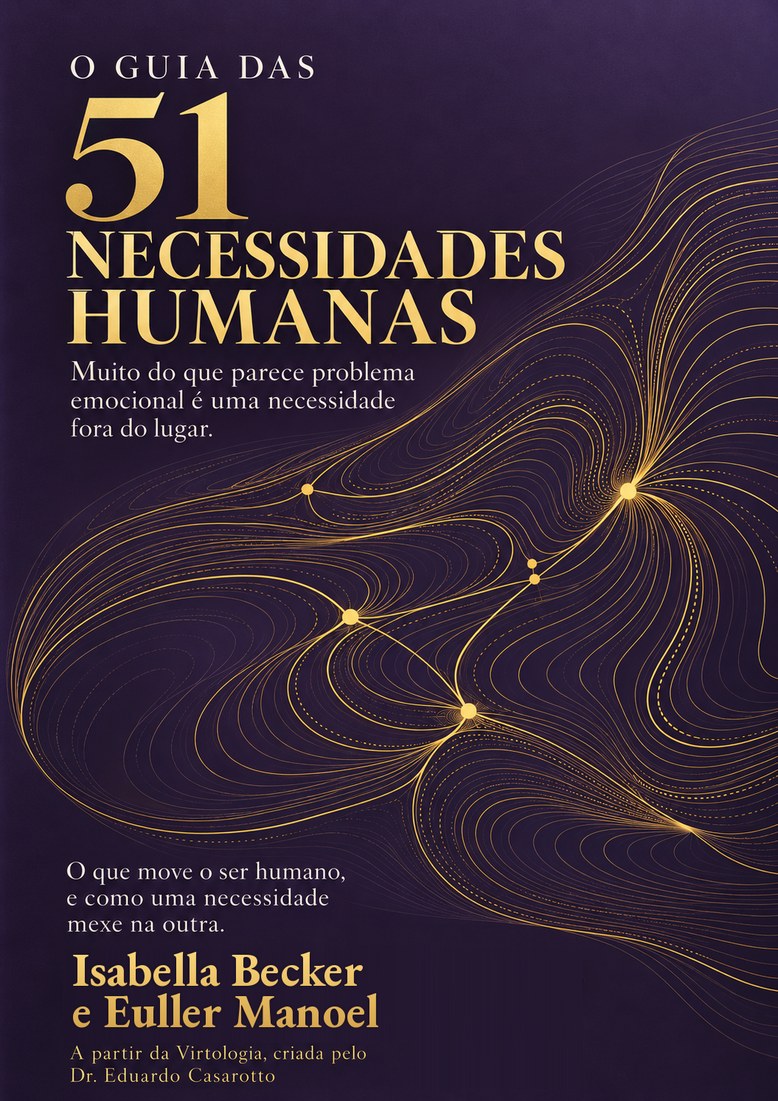
Much of what looks like an emotional problem is a need out of place.
Sleep, food, touch, a corner of your own, someone to talk to, a reason to get up in the morning. When one of these things is missing for too long, it drags the others down with it. This book explains the 51 human needs, one by one, in the language of people who never studied psychology, and shows what to do about each one.
Vicente is forty-two. He sleeps badly, has lost his patience with his children, and says his work no longer makes sense. His wife thinks it is depression. Eight months ago, his mother moved in with the family, and his home office became her bedroom. Vicente no longer has a single corner in the house, he does not move his body, and he does not have one minute of leisure. The question of meaning came to a man with no rest.
What is in excess usually covers what is missing. Almost always, it is another need asking for attention.
Before looking for the flaw in you, it is worth looking at what is missing in your life.
“Without this foundation, the system abandons every other priority to restore vital parameters.”Dr. Eduardo Casarotto
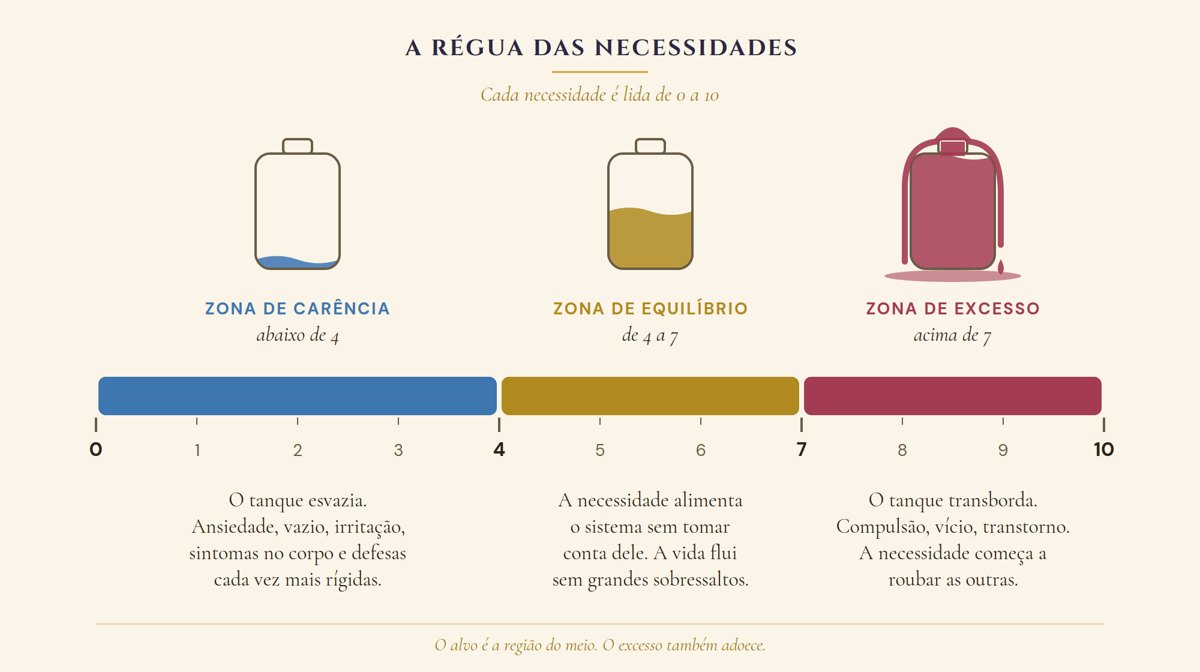
Think of a tank. Every need that is met puts fuel in it. Every need that goes unmet takes fuel out. When the level drops, you read the world differently. A small criticism sounds like an attack. A simple task becomes a mountain.
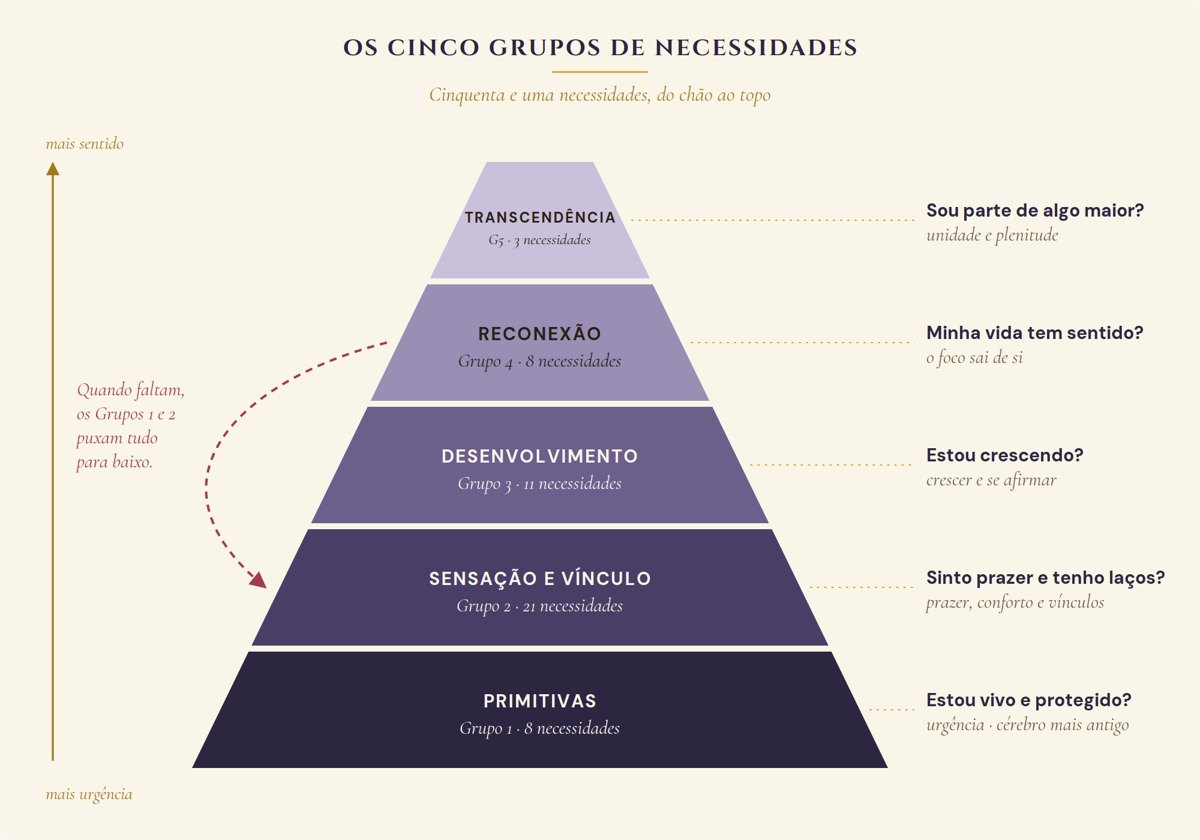
The 51 needs fall into five groups, from the ground up. First, what keeps you alive and protected. Then pleasure, comfort, and bonds. Then growing and asserting yourself. Then meaning. At the top, feeling part of something greater. When the ground is missing, everything else becomes hard, and not for lack of willpower.
Each need gets a score from 0 to 10 and has its own clock. Sleep responds in days. Touch and fun, in weeks. Bonds, in months. The meaning of life, in years.
From what a need is to the plan for the next four weeks.
The score from 0 to 10, how long each need can go unmet, and the five groups. And why the brain's fatigue also runs through the body.
One profile for each, across the five groups, always with the same design. You learn to read one and you read the others the same way.
Where the lack flows, the excess that blocks, the mask, what addictions inflate, and nine constellations to recognize yourself in.
Making your map, starting from the foundation, reaching the virtues, knowing when to seek help, each stage of life, and a four-week plan.
Each profile answers the same questions, in the same order, with a story at the end.
This is the part that changes the way you look at yourself. When one need moves out of place, the others feel it.
The lack of one knocks down another.
The excess of one tries to cover the lack of another.
The excess of one keeps the other from happening.
What shows hides what is missing, even from you.
Two rise together, pulled by the same alarm.
Then come nine constellations, the patterns that show up most often in people's lives:
The book was designed to be understood the first time. The figures show what the text explains.


Seven chapters to move from reading to changing.
How to score yourself without fooling yourself, and what to do with the pattern that appears.
Why to start at the bottom, and a small, concrete plan to do it.
Virtue as a muscle, one at a time, always with the ones that come before it.
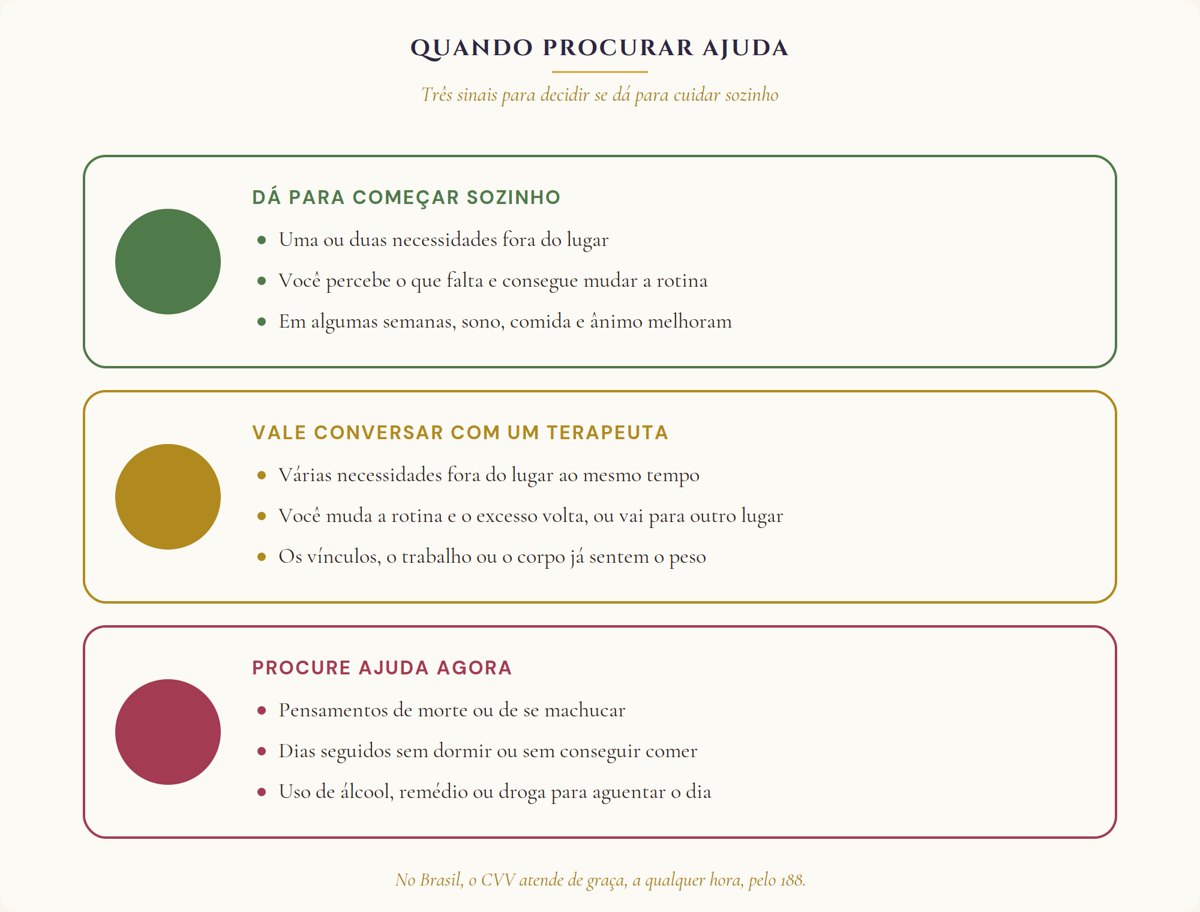
What you can do on your own, when to look for a therapist, and when help is needed now.
What each age asks for, what is not a symptom, children, aging parents, and the woman's body: the cycle, pregnancy, the postpartum period, and menopause.
People who try to change ten things on the same Monday usually change none of them by Friday.
The 51 profiles, the network between the needs, everyday care, the four-week plan, and the Map of the 51. Yours forever, to open at whichever need catches your attention.
Not yet. The book is currently available only in Portuguese. An English translation is coming soon. The purchase on this page is for the Portuguese edition.
It is a PDF book with instant delivery. As soon as Hotmart confirms the purchase, you receive access and can read it on your phone, tablet, or computer, and print it if you like. The table of contents is clickable, so you can go straight to the need you are looking for.
No. The book was written for people who never studied psychology. Each need is explained with a story, drawings, and simple questions.
No. Part I is worth reading first, because it explains the score from 0 to 10 and the time frame of each need. After that, you can go straight to the profile that caught your attention in the table of contents.
No. It helps you understand and take care of your own needs, and it has an entire chapter on when to seek help. Diagnosis and medication belong to the doctor.
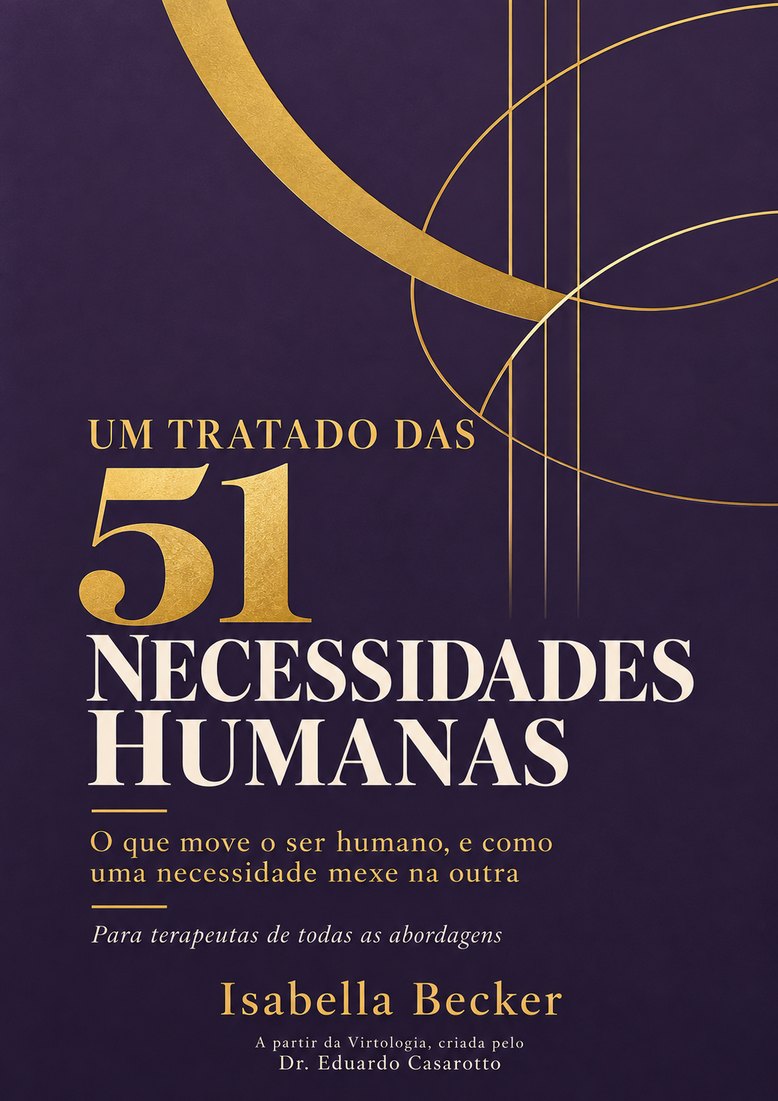
A Treatise on the 51 Human Needs was written for therapists, with session questions, clinical cases, and use alongside various approaches. The Guide was written for you, who want to understand your own life.
It is the system created by Dr. Eduardo Casarotto, which brings together the 51 human needs, the 33 virtues, and the Laws of Life. The Guide tells the needs part in language for everyone.
The 51 human needs, explained one by one, with what to do about each one.

The version of this book for therapists.
Discover the book →
Five layers to see the whole design of who you are.
Discover the Map →
The grammar of life, law by law.
Discover the book →
The Gospels and Virtology, side by side, with Euller Nascimento.
Discover the book →
33 virtues in fables, myths, and parables.
Discover the book →
A book to hold you through grief for a beloved animal.
Discover the book →